How To Write A Photo Project Statement
A practical step-by-step guide to how to write a photo project statement, including preparation, instructions, common issues, tips, and next steps.
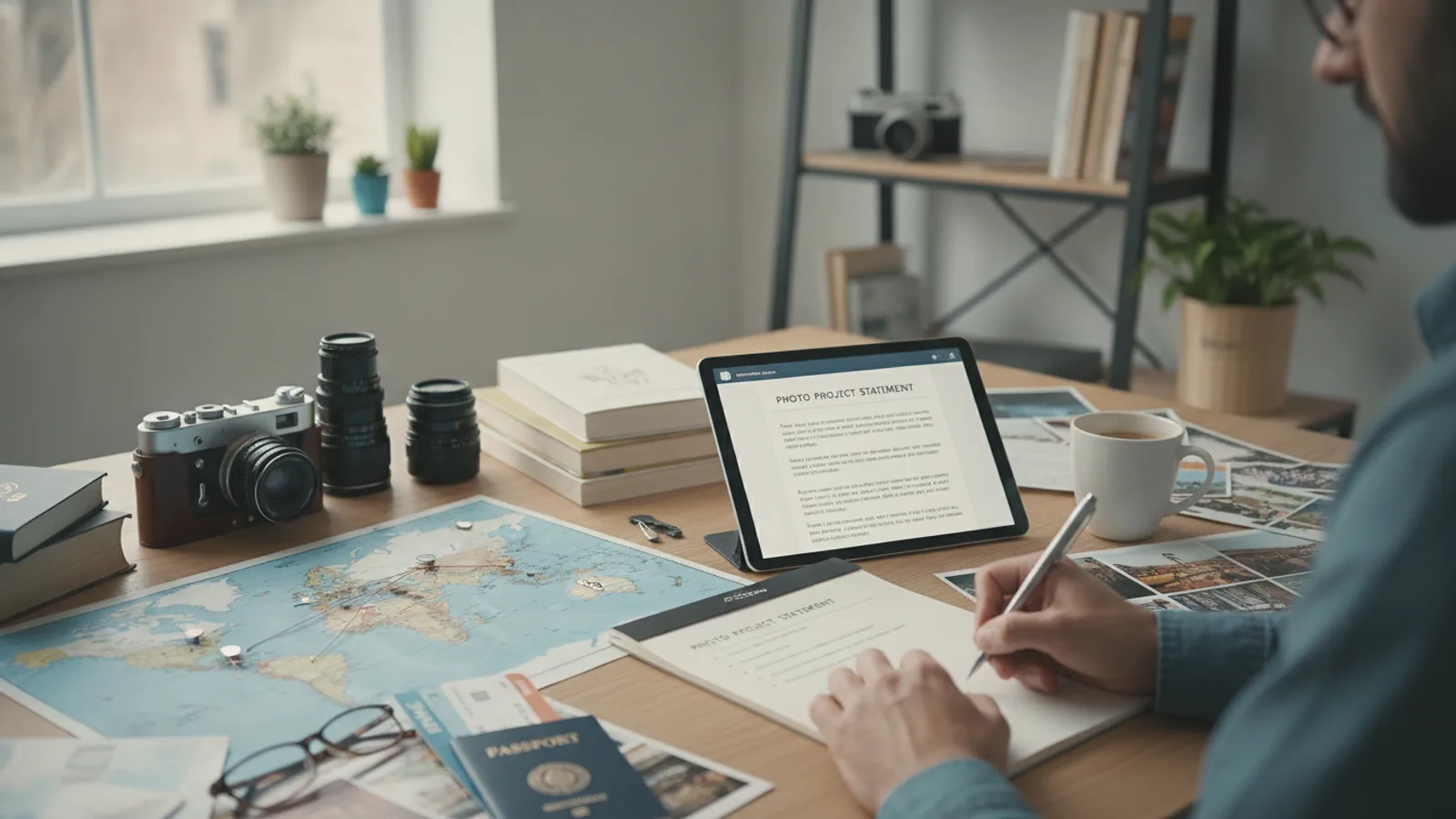
How To Write A Photo Project Statement
This guide explains how to approach how to write a photo project statement, including the preparation, practical steps, common mistakes, and final checks that help you finish with confidence.
Before You Start
Step-by-Step Instructions
Quick Reference
Common Problems When You Write a Photo Project Statement
Writing about your own creative work can be challenging, and it's easy to fall into certain traps. Knowing these common problems can help you avoid them and craft a stronger statement.
Problem: The Statement is Too Vague or General
Description: Your statement uses broad terms like "my photos explore beauty" or "I wanted to show interesting things." It doesn't give specific details about your project or unique perspective.
Fix: Replace vague language with concrete examples and specific descriptions. Instead of "beauty," talk about "the subtle patterns in urban decay." Instead of "interesting things," name what those things are and why they are interesting to you. Be precise about your subject, theme, and intentions. Imagine you're describing your photos to someone who has never seen them.
Problem: It's Too Technical or Full of Jargon
Description: You might be tempted to talk about your f-stops, shutter speeds, or specific camera models. While these details are important for photographers, they often confuse or bore a general audience.
Fix: Focus on the *why* and *what* of your process, not the *how* in technical terms. If you used a specific technique (like long exposure or composite imaging), explain its effect on the images or its conceptual importance, not just the technical steps. For example, "I used long exposures to blur the chaos of the city into a peaceful flow," instead of "I shot at f/11 with a 30-second shutter speed."
Problem: The Statement Doesn't Match the Photos
Description: Your written description might sound great on its own, but when someone looks at your photos, they don't see the connection. The statement promises one thing, and the images deliver another.
Fix: This is why getting feedback is crucial. Ask others if your statement accurately reflects the visual content and mood of your work. You might need to adjust your statement to align more closely with what's actually visible in your photographs, or you might realize your photos aren't fully expressing your initial intent. Sometimes, the project itself needs refinement. Ensure your words and images work together to tell the same story.
Problem: It's Too Long or Too Short
Description: An overly long statement can lose the reader's attention, while one that's too short might not provide enough context. You're aiming for a sweet spot.
Fix: For most applications (exhibitions, portfolio reviews), a statement between 100 and 250 words is ideal. If yours is too long, cut redundant sentences, combine ideas, and eliminate less crucial details. If it's too short, ensure you've covered all the key elements: theme, intent, process (briefly), and desired impact. Expand on your motivation and the deeper meaning of your work without adding fluff.
Problem: Lack of Personal Voice or Connection
Description: The statement sounds dry, academic, or generic. It doesn't convey your passion, your unique perspective, or what makes *your* work special.
Fix: Revisit your "intent and motivation" section. Infuse your statement with a sense of your personal connection to the subject. Why are *you* the one telling this story? What unique experiences or insights do you bring? Use language that feels natural to you while maintaining professionalism. Let your personality and artistic passion shine through in your words.
Advanced Tips for Writing a Photo Project Statement
Once you've mastered the basics, consider these advanced strategies to make your photo project statement truly stand out and serve your long-term artistic goals.
Tip: Tailor Your Statement for Different Audiences
Not every reader needs the exact same information. A statement for a gallery show might focus more on artistic intent and less on technical process, while a statement for a commercial client might highlight your specific skills and how they solve a problem.
Having a core statement is fine, but be prepared to tweak it for specific opportunities. This shows professionalism and thoughtfulness.
Tip: Practice and Keep a "Statement Journal"
Writing is a skill that improves with practice. Don't wait until you *need* a statement to start writing. Regularly reflect on your photography projects, even small ones, and try to summarize them. Keep a journal where you jot down ideas, themes, and potential statements for various bodies of work.
This practice helps you clarify your thoughts, develop your artistic voice, and makes the process less daunting when a formal statement is required. Over time, you'll find it easier to articulate your intentions and the meaning behind your images.
Tip: Read Other Artists' Statements for Inspiration (Not Copying)
Look at statements from photographers you admire or those whose work is similar to yours. Pay attention to how they introduce their projects, describe their motivations, and explain their impact. Notice their tone, their use of language, and how concise or elaborate they choose to be.
The goal isn't to copy their style, but to understand different approaches and find what resonates with you. You might discover new ways to think about your own work or realize what kind of language best suits your artistic vision. This can be particularly helpful for understanding the expected conventions in different photographic genres.
Tip: Emphasize Your Unique Perspective and Voice
In a world full of images, what makes *your* photography stand out? Your statement is a chance to highlight your unique perspective. Don't just describe what you photographed, but *how you see it* and *why that matters to you*.
This could be your cultural background, personal experiences, specific research, or a particular emotional lens through which you approach your subject. When your personal voice and unique viewpoint are clear, your statement becomes more memorable and authentic, creating a stronger connection with the reader.
Tip: Consider the Visual Identity
While the statement is text, think about how it visually presents alongside your work. If you're printing it for a show, consider font, spacing, and placement. If it's online, ensure it's easy to read on different devices. A beautifully written statement can lose impact if it's poorly presented. The visual presentation of your text is part of the overall experience of your photo project.
How To Write A Photo Project Statement FAQ
Here are answers to some frequently asked questions about photo project statements:
What's the ideal length for a photo project statement?
Generally, an ideal length is between 100 to 250 words. This allows you to cover all the essential points without overwhelming the reader. For specific applications like grants or exhibition proposals, check if there's a strict word limit.
Can I use the same statement for every purpose?
You can start with a strong core statement, but it's often beneficial to adapt it slightly for different contexts. For example, a statement for a grant might emphasize the project's social impact, while one for a gallery might focus more on artistic themes and emotional resonance. Tailoring it shows you understand the audience and purpose.
Should I talk about my camera gear or technical details?
Usually, no. A photo project statement is about the *art* and *concept* of your work, not the technical specifications of your equipment. Only mention technical details if they are absolutely crucial to the project's concept or impact, and even then, explain their artistic relevance rather than just listing facts.
When should I write my photo project statement?
It's best to write your statement once your project is mostly complete or well into its development. Trying to write it too early can lead to a statement that doesn't fully reflect the final work. However, some artists find writing a preliminary statement helpful in guiding their project, then they revise it as the work evolves.
Is a photo project statement the same as an artist statement?
Not quite. An artist statement typically covers your overall artistic practice, philosophy, and themes across all your work. A photo project statement is much more specific, focusing solely on one particular body of work or series of photographs. You might have one artist statement but many different project statements.
What if I don't have a deep meaning or complex concept?
Every photo project has a meaning, even if it's not a grand, philosophical one. Perhaps your meaning is about capturing simple beauty, documenting everyday life, or exploring a personal feeling. Be honest about your intentions. The statement should accurately reflect what you're trying to achieve, regardless of its perceived complexity.
Final Checklist for How To Write A Photo Project Statement
Before you finalize and share your photo project statement, run through this checklist to ensure it's polished and effective:
A well-crafted photo project statement is a powerful companion to your images. It elevates your work, provides context, and helps viewers connect more deeply with your artistic vision. Take the time to refine it, and it will serve as an invaluable tool for sharing your photography with the world.